So just how easy is it to open a private school? It turns out that in some states, including North Carolina, it is scarily easy.
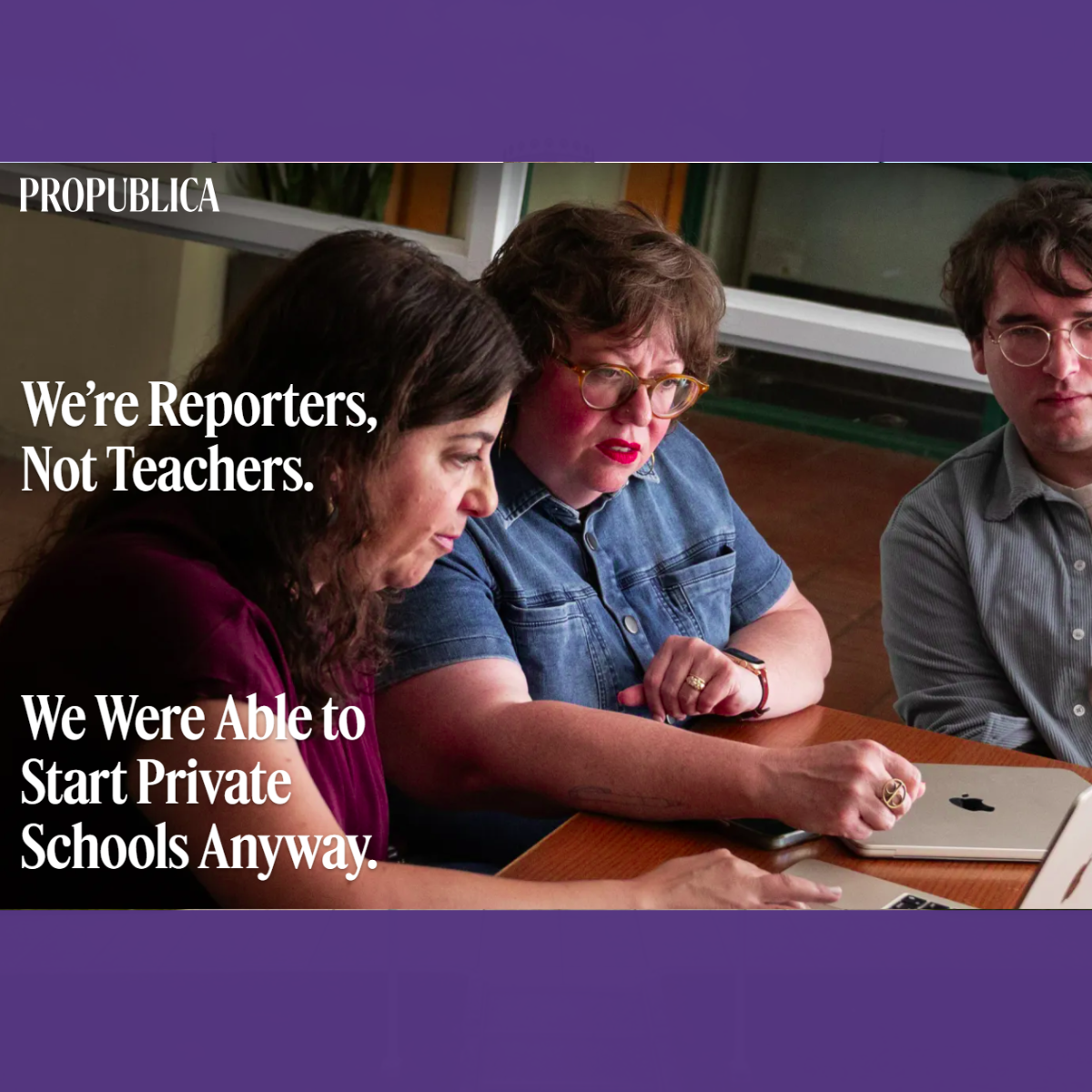
Appropriately timed for a Halloween fright, ProPublica published “We’re Reporters, Not Teachers. We Were Able to Start Private Schools Anyway,” where they detailed their efforts to start a private school in three states—Arkansas, North Carolina, and West Virginia.
The ProPublica reporters teamed up with journalists from each state to start a private school as a way to test the rigor of the process.
In Arkansas, they joined with a reporter from the Arkansas Times. To open the private school all they had to do was pay a $45 fee and confirm that the school site displayed an American flag. No education credentials were required, and the location approved for the school was the Arkansas Times’ newsroom. The process took less than a day.
According to a spokesperson from the Arkansas Department of Education, “We don’t have rules for opening a private school” and the department does not regulate private schools once they’re open.
Arkansas started a school voucher program in 2023. The number of private schools in the state has more than doubled since then (from 100 to 220+).
In West Virginia, the reporters ended up opening a microschool because opening a private school required a fire safety inspection; they didn’t want to use public dollars in pursuit of their school experiment. Microschools in WV have no limit on enrollment, so they’re essentially the same as private schools except that state law has no mechanism for oversight of microschools.
Unlike in Arkansas, the reporters had to show proof of a high school diploma, but no other qualifications were required.
Opening a private school in North Carolina did not require educational qualifications, but to process their application, the state required proof that the location selected for the school (under the school’s name) had passed a fire, health, and safety inspection. As in WV, reporters did not want to use public resources in their experiment, so they didn’t pursue the inspection.
To operate a private school, North Carolina requires the school to administer a standardized test in certain grades and maintain annual records about student attendance and immunizations. The school also has to operate during at least nine months per year. To qualify for vouchers, at least one person has to pass a criminal background check.
In addition to making it remarkably easy to open a private school in North Carolina, lawmakers have supercharged the voucher program by adding a budget item in 2023 to spend up $1 million/year to help publicize the program and help parents apply (up from $500K/year in 2021 and 2022).
The push in North Carolina to promote vouchers coincided with legislation to make them universally available, which opened the door to state funding for families who had never sent their children to a public school.
In 2025-26 North Carolina taxpayers spent nearly $600 MILLION on tuition at private schools through the Opportunity Scholarship voucher program. How many millions went to schools that met only the minimal requirements to open? Ask your state lawmakers.